Search and find products in our Catalogue
Enter the product name, part number or cross-reference below...
Hex Cap Screws & Tap Bolts

We often get asked the difference between hex cap screws and tap bolts. In short, tap bolts are fully threaded hex cap screws. Hex caps have a minimum thread length and are usually partially threaded. When selecting which one you should be using, it’s important to consider the joint’s strength, how vibration is handled, and whether it’ll fit your application.
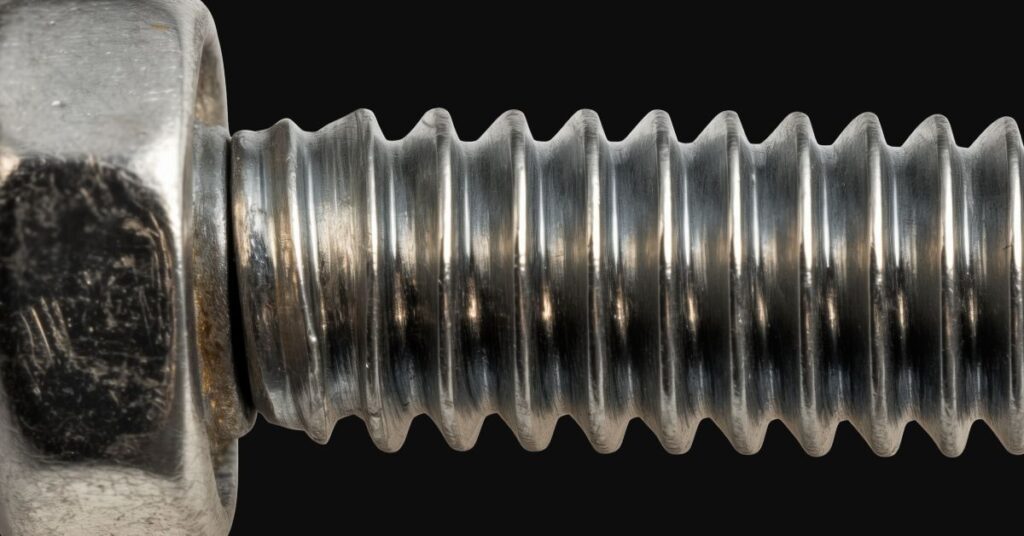
Tap bolts are fully threaded all the way to the head. They’re used in tapped holes where the entire shaft engages. Hex cap screws when partially threaded will have an unthreaded shoulder under the head. These are used when the shear plane needs to sit on a solid shank.
The standard hex cap screw thread length formula:
For bolts under 6″ in length: (2x the diameter) + 1/4″
For bolts over 6″ in length: (2x the diameter) + 1/2″
See below for a quick reference for common diameters:
| Diameter | Min. Thread (≤ 6″ long) | Min. Thread (> 6″ long) |
| 1/4″ | 0.75″ | 1.00″ |
| 3/8″ | 1.00″ | 1.25″ |
| 1/2″ | 1.25″ | 1.50″ |
| 5/8″ | 1.50″ | 1.75″ |
| 3/4″ | 1.75″ | 2.00″ |
| 1″ | 2.25″ | 2.50″ |
If a bolt is too short for a shoulder, it’s manufactured as threaded to the head aka fully threaded.
Tap bolts do not follow the above formula. They’re manufactured to be fully threaded. These are ideal for tensioning applications where you need to move a component along the entire length of the bolt. It’s also useful so you don’t bottom out (when the nut hits the shoulder before it’s fully tightened).
There are a lot of benefits to having a bolt be fully threaded, however, it’s important to consider the shear strength. This is the shoulder (or grip) portion of a partially threaded hex cap screws. It’s the strongest part of the bolt and important in many applications.
In summary, use a hex cap screw (partial thread) if:
- The bolt is being used for high-strength structural applications
- You need maximum shear resistance
- The total thickness of your material is consistent
Use a hex tap bolt (full thread) if:
- You’re threading the bolt into a pre-tapped hole
- The bolt is being used to push or level an object
- You’re unsure of the exact material thickness and need the flexibility of threads all the way to the head
Need a quote on some hex cap screws or tap bolts? Reach out to our sales team today via live chat on our website or via email.